
The Blockade Inside
Iran has squeezed oil traffic at Hormuz from the outside, while France says an Iranian military cyber unit disrupted its food supply from inside hundreds of stores. Could the sabotage have passed for part of the unrest already in the streets, allowing Iran to put more pressure on a vital supply chain?
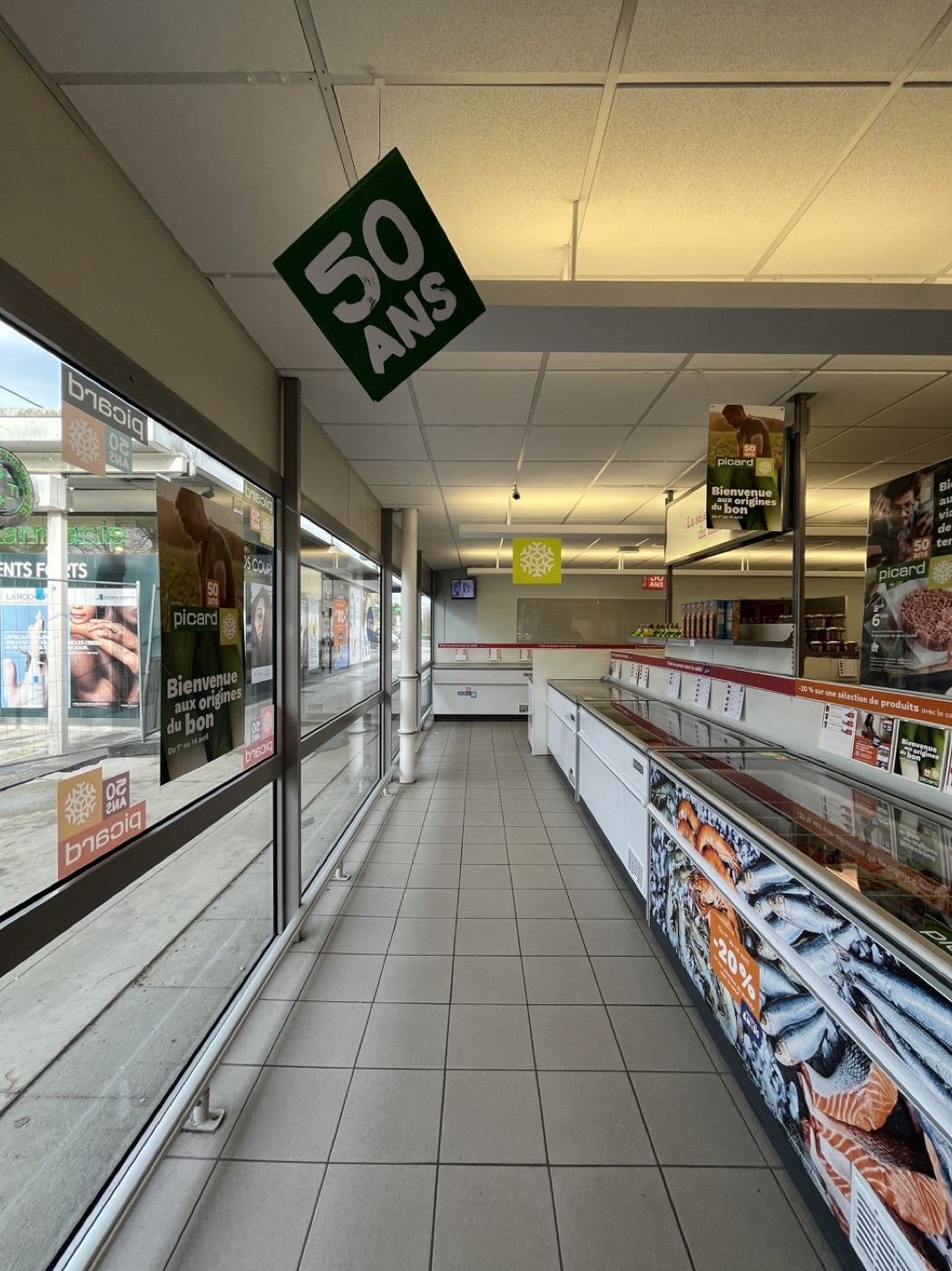
At four in the morning on October 12, a delivery driver arrived at an Intermarché in Gradignan, near Bordeaux, and found the storeroom flooded. The cold room had reached 50°C and set off a sprinkler, the owner, Charles Dezon, told Le Monde. The delivery had made it to the store. Nearly a dumpster’s worth of frozen food already there had to be thrown out.
France’s investigators say the overnight attack targeted refrigeration systems at roughly 700 retail sites. They recorded at least 15 fires. Butchers, a slaughterhouse and food-processing plants were also hit. The foreign ministry put the value of the spoiled food in the tens of millions of euros.

The unit France named
On November 9, France publicly attributed the sabotage to Shahid Kaveh, an offensive cyber unit within Iran’s Islamic Revolutionary Guard Corps, or IRGC. French investigators concluded that the Guards had ordered the operation and the unit had carried it out. Their report identified three senior officers. The next day Paris summoned Iran’s ambassador. Tehran denied involvement.
One clue was that the computers used in the refrigeration attack had also been used to probe equipment at utilities, in a way French investigators had seen from Shahid Kaveh before. They found traces of Persian, too. Three people familiar with Microsoft’s work told Reuters that the company had privately traced the attack to Iran. Microsoft declined to comment.
In Persian, shahid means “martyr.” The name appears to honor Mahmoud Kaveh, a Guards commander killed in the Iran–Iraq War in 1986. French investigators say the unit uses fronts that pose as independent hackers to claim some of its operations. Iran’s armed partners, such as Hezbollah in Lebanon and the Houthis in Yemen, have organizations and agendas of their own. The hackers’ front names function more like aliases. One of them, CyberAv3ngers, had already surfaced in western Pennsylvania.
Sources
Gradignan and the investigation The owner’s account · French investigators · Foreign Ministry · Iran’s reply
Attribution and background Reuters on Microsoft · The unit’s name · Persian–English dictionary · Middle East Institute
The Pennsylvania connection
On November 25, 2023, the Municipal Water Authority of Aliquippa reported that hackers had taken control of a device at a station that regulates water pressure for two townships. Operators switched to manual control. The authority said the water remained safe to drink and service continued. The name CyberAv3ngers appeared on the station’s screen. The device was Israeli-made, like others targeted in the wider campaign.
The link goes beyond the alias. Two men named by France, Hamid Reza Lashgarian and Mahdi Lashgarian, were among six IRGC cyber officials the U.S. Treasury sanctioned in February 2024 after attacks on industrial infrastructure. Treasury identified Hamid Reza Lashgarian as head of the Guards’ cyber command at the time.
Paris attributed the 2023 attack on Charlie Hebdo and an operation against a French display company around the 2024 Olympics to another unit, Shahid Shoostari. The closest precedent for what happened in the supermarkets came in March and April 2026. According to French investigators, Shahid Kaveh claimed a campaign that included attacks on Israeli refrigeration equipment.
From Hormuz to the supermarket
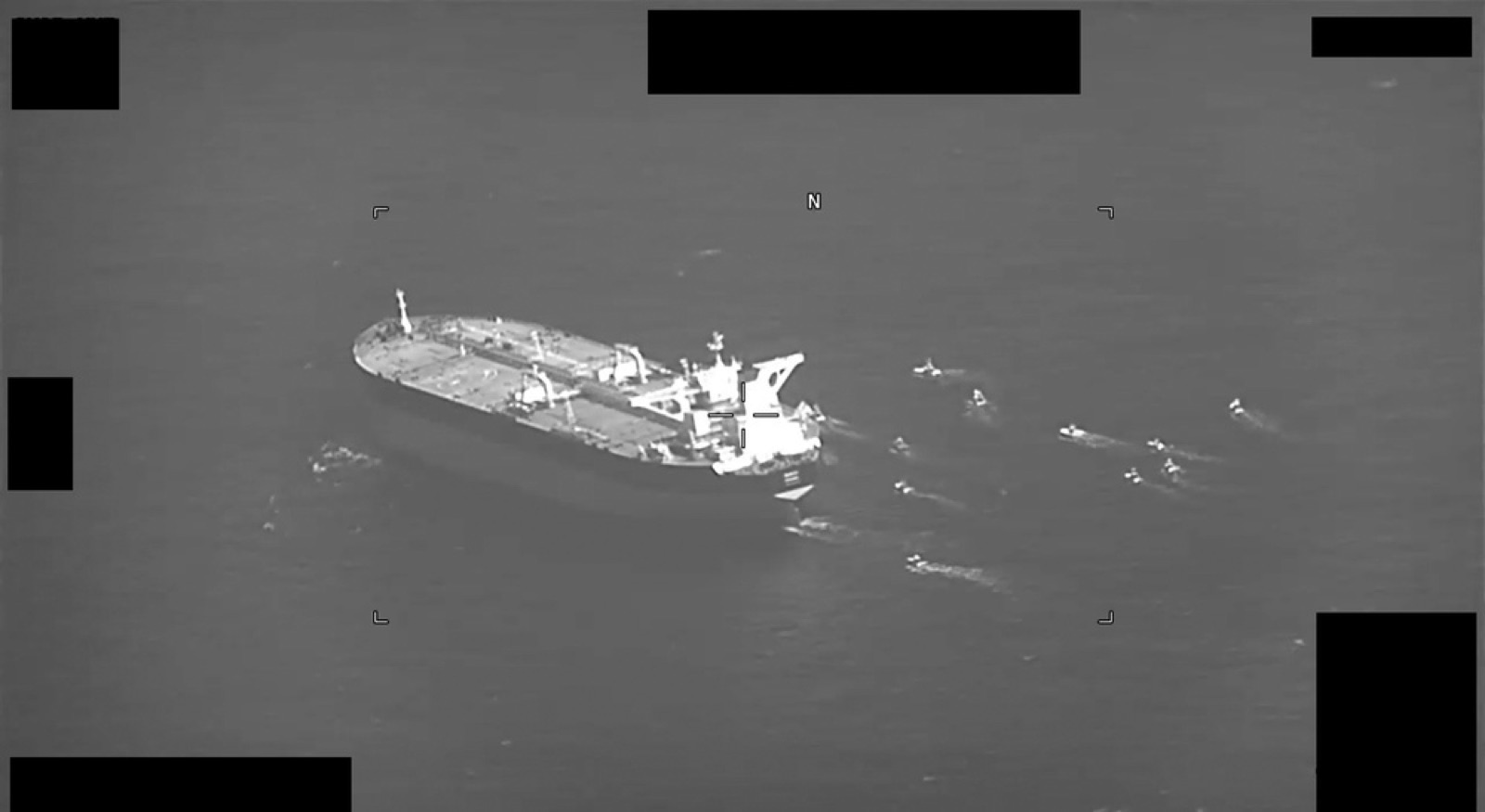
At sea, the threat to supplies that spring was public. On March 2, a senior Revolutionary Guards official declared the Strait of Hormuz closed and threatened ships that tried to pass. Oil shipments through the strait averaged 21.6 million barrels a day in the last quarter of 2025. They fell to 5.1 million in the second quarter of 2026, then recovered to 9.1 million in the third, according to the U.S. Energy Information Administration. After another round of tanker attacks in November, Reuters reported a sharp drop in weekend crossings.
The logic of Hormuz would have been familiar to the Fatimids, the Ismaili Shia dynasty ruling from Egypt when its army besieged Aleppo in 994. Aleppo appealed to the Byzantine emperor Basil II. His relief expedition forced the Fatimids to withdraw the following year. The Fatimids belonged to a different branch of Shia Islam from modern Iran’s Twelver tradition. The parallel is in how a siege works.
At Hormuz, as at Aleppo, the cargo is at risk on its way to market. With sabotage like this, the roads can stay open and a shipment can pass every checkpoint, yet the food can still end up in the bin. In Gradignan, the cold room failed after the food was already inside the supermarket.
Sources
The earlier attacks Aliquippa water authority interview · U.S. Treasury · French investigators
Shipping through Hormuz Guards’ warning · U.S. EIA, November 16, table 2 · Reuters on tanker traffic
The siege of Aleppo The Aleppo Question · Encyclopaedia Islamica · Iran’s constitution, art. 12
A weekend of protests
France was already unsettled. Reuters traced the wider movement back to school protests in September. The Anarchist Federation publicly backed the students on October 3. A separate pro-Palestinian march in Paris on October 10 called for an end to arms trading with Israel. On Sunday, October 11, a local Palestine solidarity group advertised an antifascist gathering in Fontenay-sous-Bois, east of Paris. The refrigeration attack began that night.
On October 17, five days after the driver found the flood, students, trade unions and Yellow Vests took to the streets across France. Some shops were damaged. The French retail federation named U and Intermarché among the chains affected. Days earlier, both chains had lost refrigeration at some of their stores. The overlap was in the names over the doors. By the evening of October 12, Le Monde had already identified the spoiled food as the result of a cyberattack. Who had ordered it was still a mystery.
There is a precedent for Tehran borrowing the voice of a local opposition. After a 2022 cyberattack that Microsoft attributed to Iranian state-linked actors, a group calling itself HomeLand Justice blamed Albanian politicians for its actions. In 2024, U.S. intelligence chief Avril Haines said actors tied to Iran’s government had posed as activists online and encouraged existing Gaza-related protests in the United States. In France, researchers at Alliance4Europe found that Iran’s French-language state outlets gave unusually heavy coverage to the October unrest.
A loose analogy is taqiyya, the practice in Shia tradition of concealing one’s beliefs when disclosure would bring danger. In the French case, did anyone claiming to speak for the protesters actually take credit for spoiling the food? An outlet linked to the unit carried news of the attack on October 13, French investigators say. Reuters reported that day that nobody had claimed responsibility. The French investigation offers no evidence that the unit posed as protesters or that any protest group took part.
What the attack may have been meant to do
That summer, Iran and France had expelled each other’s diplomats. French officials also pointed to tensions over Paris’s support for Iranian civil society. On November 10, a radio interviewer asked Foreign Minister Jean-Noël Barrot why the attackers had chosen France. Barrot said that was a question for the Iranians. If stores pass the cost of spoiled food on to shoppers, higher grocery bills could fuel further protests over the cost of living.
By then, similar trouble had reached other European stores. Palo Alto Networks’ Unit 42 reported that attacks on November 1–2 affected more than 100 retail locations in at least ten other countries. Swedish broadcaster SVT examined a pro-Russian group’s claim and found that its evidence failed to establish responsibility. France’s attribution covered the October attack. The Belgian chain Delhaize told the Associated Press its deliveries were running normally even as some stores had less fresh and frozen food to sell.
Paris took four weeks to name an Iranian unit. Whether the attackers hoped the unrest would conceal their role remains an open question. What the sabotage achieved was plain from the first morning. In Gradignan, the road was open and the truck reached the store. The food was lost all the same.
Sources
The demonstrations School protests · October 3 · October 10 · October 11 · October 17 · Retail federation
Contemporary reporting Le Monde, October 12 · Reuters, October 13
Earlier cases and religious history Microsoft on Albania · U.S. intelligence statement · Alliance4Europe · Encyclopaedia Iranica
Diplomacy and the November incidents Barrot interview · Diplomatic expulsions · Unit 42 · SVT · Delhaize, via AP